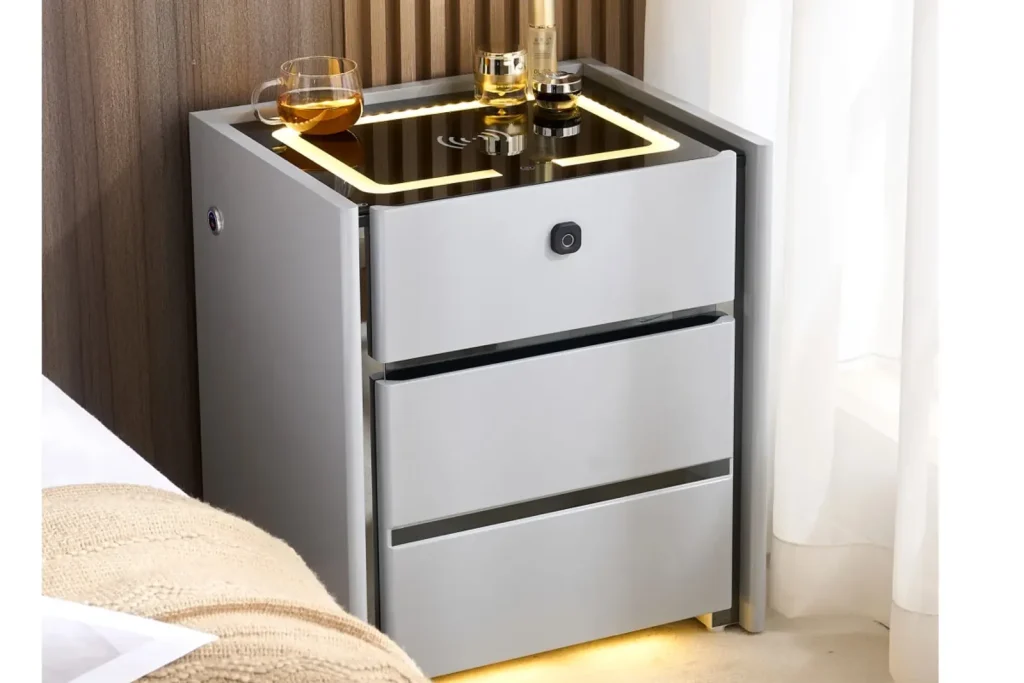
A multifunction nightstand with safe-style storage answers a very specific home problem: people keep important small items in the bedroom, but a normal drawer is not always private enough. Marriage certificates, passports, ID documents, spare keys, watches, jewelry, cash envelopes, family records, and small electronics often end up beside the bed because that is where people want quick access.
A lockable bedside compartment can make that storage more organized and less exposed to casual access. It should not be presented as a replacement for a certified home safe unless the product is actually built and tested for that purpose. For most furniture buyers, the better positioning is practical privacy storage inside a bedroom furniture item.
Kuan Zhang’s view is that this category works best when buyers define the storage level clearly. Is it a lockable drawer, a safe-style box, a fingerprint cabinet, or a certified safe module installed into a nightstand? Those are different products, and they should not be described as the same thing.
Why the Bedroom Creates This Demand
The bedroom is where many families keep personal items they do not want mixed into public household storage. A marriage certificate or passport may not need bank-vault protection, but it should not sit loosely in a living-room drawer. Jewelry and watches may be used daily, so storing them in a distant cabinet can be inconvenient. Medicines, spare keys, backup cards, and private documents also need a place that is close, tidy, and not immediately visible.
This is why safe-style storage fits naturally into the multifunction nightstand trend. The product is already expected to combine drawers, charging, lighting, and personal organization. Adding a lockable zone can make the nightstand more useful if the design stays simple and the buyer avoids overpromising.
The broader demand shift from a simple bedside cabinet to a more functional bedroom product is discussed in the article on nightstands becoming smart nightstands. Safe-style storage is one part of that same shift, but it serves a more private use case.
What People Actually Store Inside
For many households, the most practical items are documents and small valuables. A couple may want one place for marriage certificates, family ID copies, insurance papers, passports, birth records, or a small emergency cash envelope. Others may use the compartment for jewelry, watches, spare house keys, small electronics, external drives, or items they do not want children or guests to reach casually.
That does not mean every nightstand needs a heavy safe. In many homes, the value is less about stopping a determined theft and more about reducing everyday exposure. A lockable area helps separate private items from normal bedside clutter.
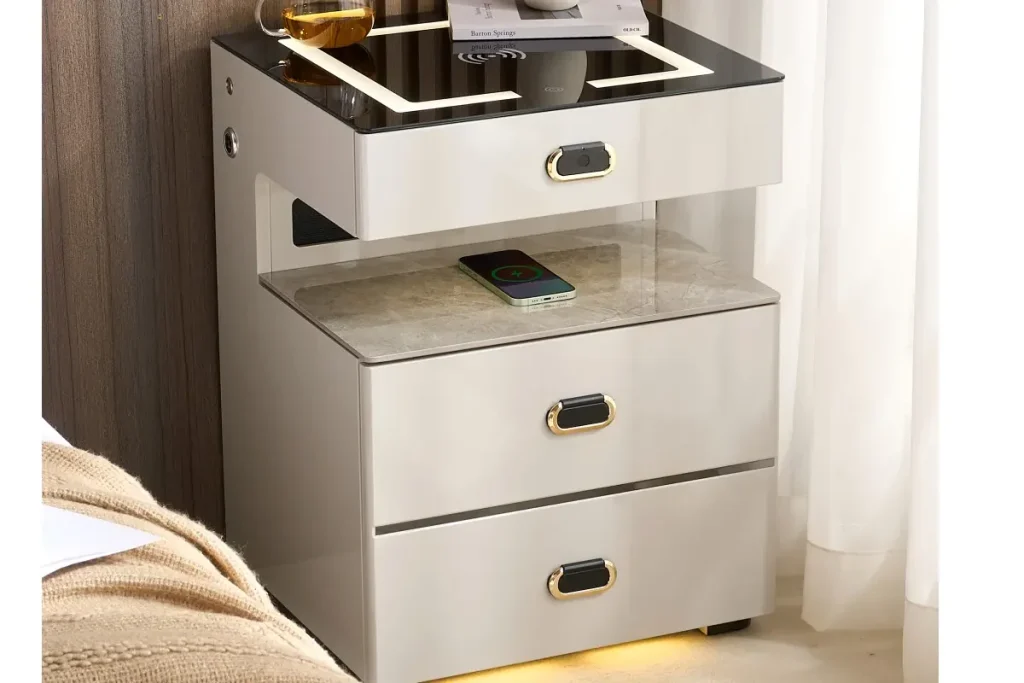
There is also a behavior benefit. When the lockable space has a clear purpose, users are less likely to scatter important items across many drawers. This matters for small apartments, rental homes, serviced apartments, and family bedrooms where personal storage is limited.
Security Claims Need Careful Wording
The word “safe” can be powerful in marketing, but it can also create risk. A furniture buyer should ask what level of protection the product actually provides. A thin lockable drawer, a wooden cabinet with a digital lock, a steel safe box, and a certified fire-resistant safe are not equivalent.
If the product is mainly a lockable privacy compartment, describe it that way. If the supplier claims fire resistance, pry resistance, burglary resistance, or waterproof protection, ask for test reports and certification documents. Do not build product copy around claims the factory cannot support.
This is where a strong product specification sheet helps. The guide on furniture product specification before quotation explains why buyers should define function, material, hardware, packaging, and acceptance criteria before price comparison. For a lockable nightstand, the lock type and storage module should be part of that specification, not a detail added after sampling.
Lock Type Changes the User Experience
A simple key lock is familiar and usually easier to service. It also creates the common problem of lost keys. A digital keypad feels more modern, but buyers need to check battery access, emergency opening, reset steps, and whether the keypad is easy to use in low light. A fingerprint lock can be convenient for daily use, but it needs clear enrollment instructions, backup access, and a realistic plan for failed recognition.
For families, a lock should reduce friction, not create anxiety. If a user cannot open the compartment after a battery failure or fingerprint error, the smart feature becomes a customer-service problem.
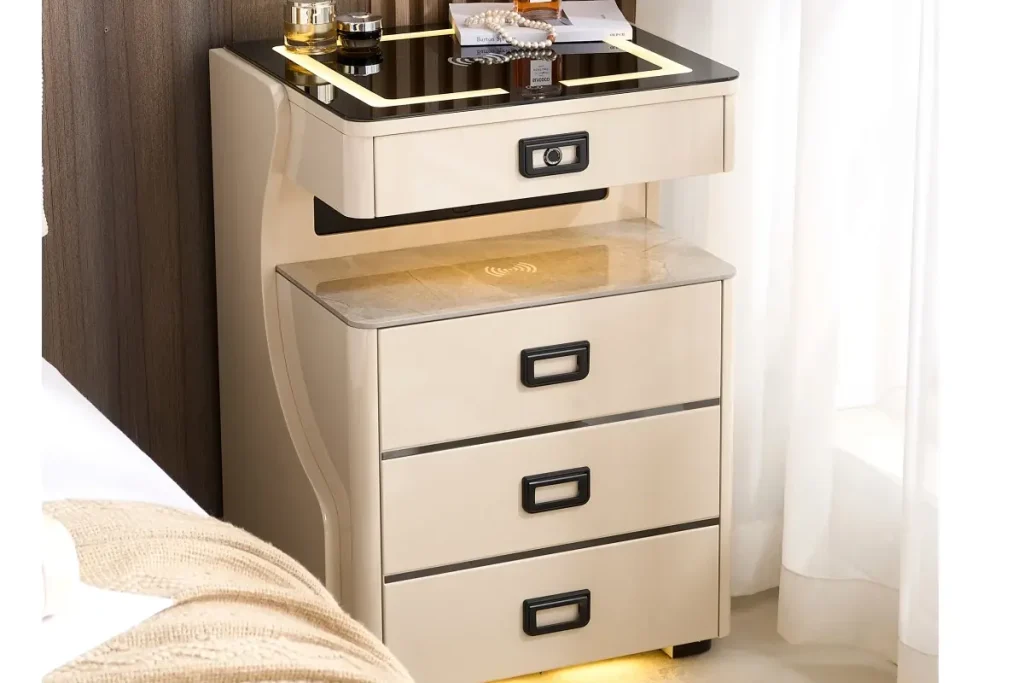
Buyers should test the lock as part of normal use: open the drawer when standing beside the bed, reach the compartment in dim light, reset the lock without damaging the cabinet, and confirm whether spare keys or emergency power access are included. The answer should be written into the manual and spare-parts plan.
The Storage Layout Matters More Than the Feature List
A lockable compartment should not consume the entire product unless that is the main selling point. A nightstand still needs normal bedside storage. Users need space for a phone, charger, glasses, books, tissues, remotes, and other daily items. If the safe module makes every drawer shallow or awkward, the product may look impressive but feel inconvenient.
The best layout is usually a mix: open or easy-access storage for daily items, a normal drawer for bedside clutter, and one private lockable zone for documents or valuables. Cable routing and charging should not interfere with the locked section. A user should not need to unlock private storage just to charge a phone.
This connects to the earlier sourcing checklist for smart nightstands and connected bedroom furniture. Buyers need to check function layout, module placement, heat space, power access, and service parts together rather than treating each feature separately.
Safety and Family Use
Lockable storage can make a bedroom feel more organized and private, but it should be designed with household safety in mind. If families may store medicines, sharp objects, batteries, or private documents, the lock must be reliable enough for the intended use. At the same time, it should not trap essential items behind a complicated failure mode.
Child access is another practical concern. A lightweight cabinet that can be pulled open, tipped, or damaged around the lock area may not perform well in a real bedroom. Buyers should check stability, drawer runners, hinge strength, handle placement, corner protection, and whether the lock area weakens the cabinet structure.
Packaging and After-Sales Checks
A nightstand with a safe-style module has more parts that can fail in shipment than a plain bedside table. The cabinet panels, drawer runners, lock face, keypad, fingerprint reader, hinges, internal box, lighting, charging surface, power adapter, and accessories all need protection. A small dent near the lock can make the whole product feel defective.
Packaging should protect both appearance and function. The article on bedroom furniture packaging and loading is relevant because smart or lockable products need more careful accessory packing, carton strength, corner protection, and final inspection before loading.
After-sales planning should include extra keys, lock instructions, battery information, reset procedures, replacement lock modules, adapter details, and a simple troubleshooting path. These details are not exciting, but they decide whether the product is manageable after delivery.
Buyer Checklist Before Sampling
- Define whether the product is a lockable drawer, safe-style compartment, steel safe box, or certified safe module.
- List the intended storage use: documents, passports, jewelry, watches, keys, medicine, cash envelopes, or small electronics.
- Confirm lock type, backup access, reset logic, battery replacement, spare keys, and instruction wording.
- Check whether the lockable zone affects normal drawer use, charging access, cable routing, and bedside reach.
- Ask the supplier for supported claims before using words such as fire-resistant, anti-theft, waterproof, or certified.
- Test stability, drawer runners, hinges, lock mounting, panel strength, and the area around the lock face.
- Review packaging for the lock module, glass or glossy top, lighting parts, adapter, accessories, and carton drop risk.
- Prepare after-sales parts and instructions before shipment, not after the first customer complaint.
Final Note
Multifunction nightstands with safe-style storage can be useful for modern homes because they solve a real bedroom storage problem. They give families a more private place for marriage certificates, passports, jewelry, keys, watches, cash envelopes, and other small personal items while still keeping the product close to daily routines.
The opportunity is strongest when the buyer treats this as a furniture product with a clearly defined private-storage function. Good design is not only about adding a lock. It is about matching the storage promise, lock system, cabinet structure, packaging, instructions, and after-sales plan to the way families actually use the bedroom.