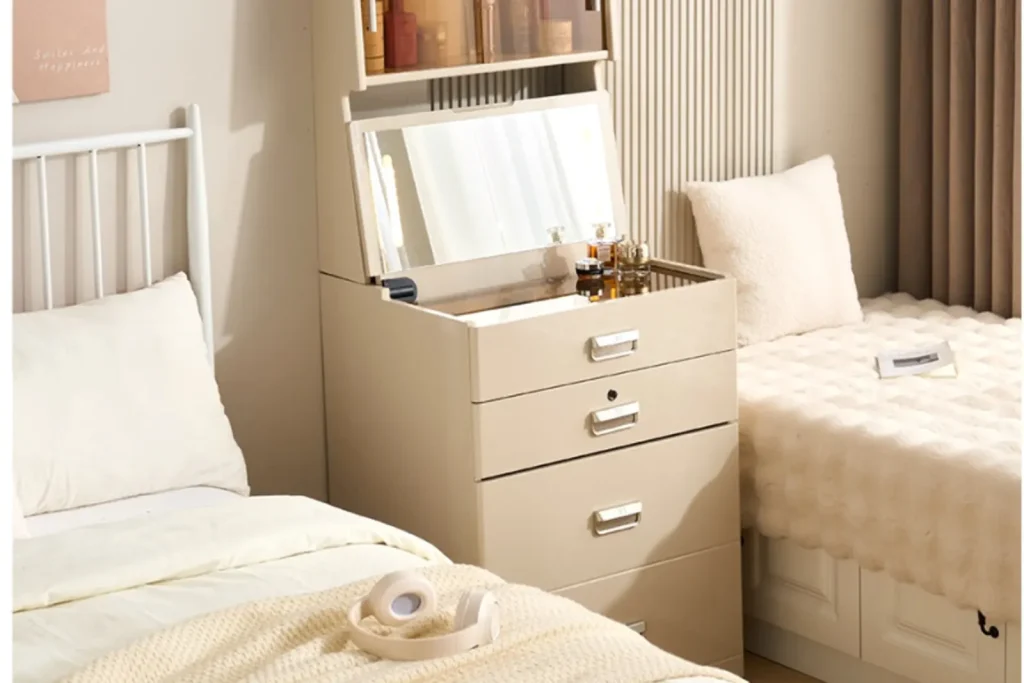
A smart nightstand changes the bedroom in a different way from a normal bedside table. A normal nightstand gives a place for a lamp, phone, book, glass, and a few personal items. A smart nightstand tries to bring several daily functions into the same small footprint: charging, lighting, storage, display, locking, and sometimes audio or connected controls.
For families, this can make the bedroom more convenient. It can also create new design and sourcing questions. A product that sits beside the bed is used when people are tired, half awake, preparing for sleep, waking up, or looking for something in the dark. That use case is different from a living-room cabinet or office desk.
Kuan Zhang’s view is that smart nightstands should be evaluated as household furniture first and technology furniture second. The product has to improve daily use without turning the bedside area into a cluttered control panel.
It Changes How Families Charge Devices
The most visible change is charging. Phones, watches, earbuds, tablets, reading devices, and small household electronics often end up near the bed. A smart nightstand can reduce loose adapters and cable clutter if the charging zone is placed well and the ports are easy to reach.
But charging convenience can become a weakness if the product is designed only for showroom photos. A wireless charging surface that is too small, too far back, or too sensitive to phone position may frustrate users. USB and Type-C ports that face the wrong direction can make cables bend. If the adapter is hidden but hard to replace, after-sales service becomes more difficult.
For buyers, the practical lesson is clear: charging features should be tested in real bedside positions, not only on a clean product table. Users should be able to place a phone, open a drawer, turn on a light, and reach a cable without moving everything on the top surface.
It Changes Bedside Lighting
Lighting is another important home impact. Many smart nightstands include LED strips, sensor lights, mirror lights, night lights, or ambient lighting. These features can help people move around at night, prepare for bed, find small items, or avoid turning on a bright room light.
The problem is that bedroom lighting must feel comfortable. A light that looks dramatic in a product photo may be too bright, too cool, or poorly placed for daily use. Families may use the same bedroom at different times, and one person’s convenience can disturb another person’s rest if the light is harsh or difficult to control.
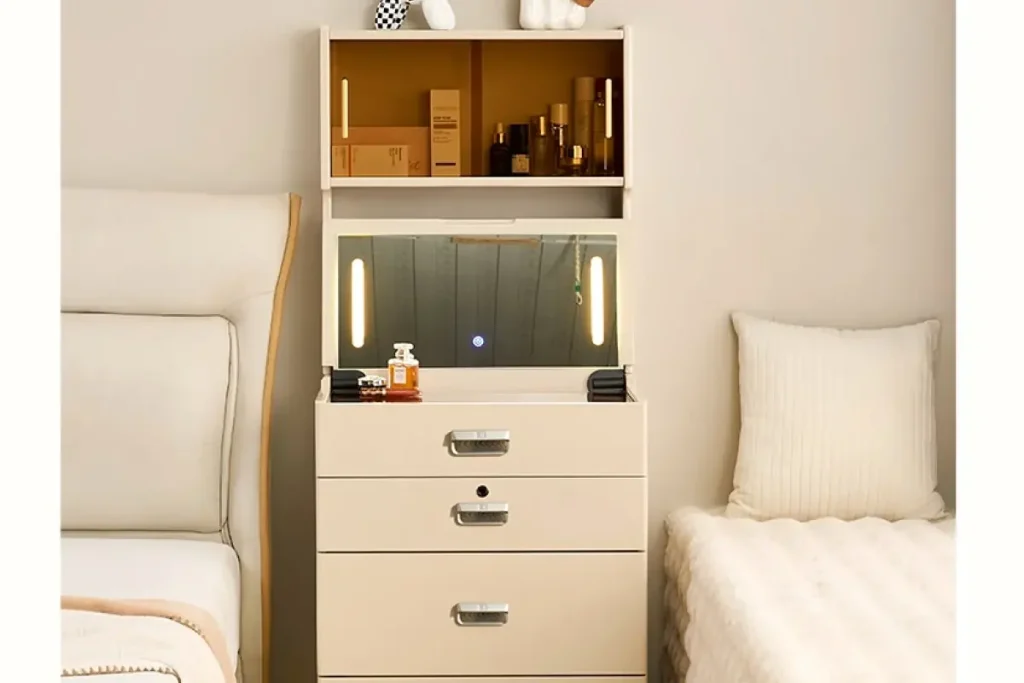
Buyers should ask whether the light has a clear purpose. Is it for reading, finding objects, walking at night, vanity use, drawer visibility, or decoration? The answer affects brightness, color temperature, switch position, sensor logic, and whether the lighting module should be replaceable.
It Changes What the Bedside Area Stores
A smart nightstand is often expected to store more than a traditional bedside cabinet. Besides books and personal items, families may place chargers, adapters, remotes, medicines, glasses, jewelry, documents, cosmetics, watches, or small electronics inside the product.
This creates a storage-design question. The product needs enough open access for daily items, enough closed storage for private items, and enough internal space for wires and modules. If every drawer is used for electronics or decoration, the nightstand may lose its basic furniture function.
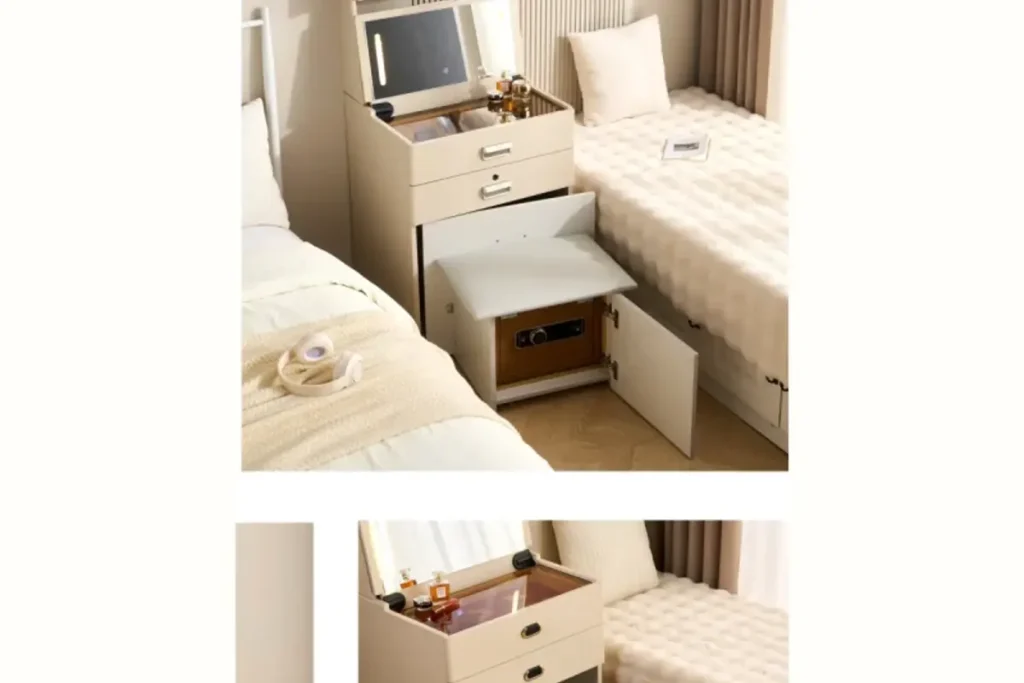
Lockable storage can be useful in some homes, especially where people want to separate private items, medicines, documents, or valuables. But a lock also adds responsibility: keys, reset logic, power failure behavior, instructions, and service parts must be considered before mass production.
It Changes Small-Bedroom Planning
In many homes, the bedroom is not large. A smart nightstand can help by combining lamp, charger, storage, and small organizer functions into one piece. This is one reason the category has stronger appeal in apartments, compact bedrooms, student housing, serviced apartments, and small guest rooms.
The same compactness can create problems if the product is too deep, too tall, too heavy, or too complicated to assemble. A bedside product must still fit common bed heights and allow people to reach the top surface comfortably. If the charging surface is high but the drawer handle is low, the user experience may feel awkward.
This is where the earlier article on the demand shift from nightstands to smart nightstands is useful. The market opportunity is not only the smart module. It is the ability to solve several small home problems in one furniture item.
It Raises Safety and Maintenance Questions
Because smart nightstands may include power adapters, charging boards, LED strips, cables, locks, glass, mirrors, and moving drawers, families experience the product differently from a simple wooden cabinet. The product should be stable, easy to clean, easy to operate, and clear enough that users understand what can and cannot be done.
Buyers should pay attention to cable routing, heat space, module access, instruction clarity, spare parts, and the way electrical components are separated from storage areas. If a drawer can crush a cable, if a module is impossible to replace, or if the user manual is vague, the smart feature can become an after-sales problem.
The sourcing checklist in Smart Nightstands and Connected Bedroom Furniture: What Buyers Should Check goes deeper into module, cable, heat, certification, and supplier questions. For home use, those technical details affect whether the product remains convenient after the first few weeks.
It Changes Privacy Expectations
A bedside product is close to personal life. Even when a smart nightstand is not connected to a home network, buyers should think about privacy expectations. Does the product include Bluetooth audio, app control, voice control, sensor lights, fingerprint locks, or digital locks? Does the user understand what data or settings are involved? Can the product work without an app?
For many furniture buyers, a simple product with local controls may be easier to sell and service than a product that depends on a complex app. Not every family wants the same level of connectivity beside the bed. Some only want wireless charging and soft lighting. Others may accept app control or audio features. The product should match the channel and user expectation.
It Changes Packaging and Instructions
A smart nightstand may look like a furniture item, but the packing job is more demanding. The carton must protect panels, corners, mirrors, glass, lighting modules, wiring, adapters, handles, and accessories. The instruction sheet must explain not only assembly, but also charging, lighting, lock use, maintenance, and basic troubleshooting.
For families, poor instructions create frustration. For buyers, poor instructions create reviews, returns, spare-part requests, and service cost. Packaging and instructions are not secondary details when a furniture item contains functional parts.
The article on bedroom furniture packaging and loading is relevant here because the product must arrive with both cabinet structure and smart functions intact.
What Buyers Should Ask Before Developing a Smart Nightstand
Before adding a smart nightstand to a product line, buyers and brand teams can ask several practical questions:
- Which family problem does the product solve: charging, lighting, storage, privacy, small-space planning, or a mix of these?
- Can a user operate the main functions while lying in bed or standing beside the bed?
- Does the lighting feel useful at night, or is it only decorative?
- Are charging ports and wireless charging zones easy to reach without cable clutter?
- Can drawers and doors be used normally when devices are charging?
- Are electrical modules separated from storage areas and accessible for service?
- Does the product still work as a good nightstand if the smart feature is not being used?
- Are packaging, instructions, spare parts, and after-sales questions planned before mass production?
Final Note
Smart nightstands can make the home bedroom more convenient, especially where families need charging, lighting, and storage in a compact space. The category can also create problems if the product is developed as a feature list instead of a piece of furniture used every night.
The best smart nightstand is not the one with the most functions. It is the one that makes daily bedroom routines easier while staying stable, comfortable, understandable, serviceable, and visually suitable for the home.