Furniture buyers often focus on product price, sample quality, and delivery time. Payment terms may look like a separate finance topic, but they are closely connected to production risk. Once a deposit is sent, the buyer has less leverage if the specification is unclear, the sample is not approved properly, or the supplier has not confirmed what will happen before the balance payment.
This is why payment terms should not be treated as a final line at the bottom of a quotation. They should be reviewed together with the product specification, sample status, order quantity, production schedule, inspection plan, packaging requirement, and shipment arrangement.
Kuan Zhang’s view is that payment risk usually starts before money moves. A buyer who sends a deposit before the product target is clear may not be buying a controlled order. They may only be buying a promise that still has too many open details.
Payment Terms Are Part of Order Control
In furniture sourcing, buyers may see several payment structures: deposit with balance before shipment, deposit with balance after inspection, payment against shipping documents, letter of credit for larger or more formal orders, or smaller sample payments before bulk production. The right structure depends on supplier relationship, order size, country, product complexity, and buyer risk tolerance.
The practical point is not to copy one payment formula for every order. The practical point is to connect each payment stage to a clear milestone. A deposit should follow a confirmed order target. A balance payment should follow agreed evidence that production, quality, packing, and shipment preparation are under control.
When payment terms are vague, both sides can interpret them differently. The supplier may expect balance payment once goods are packed. The buyer may expect balance payment after inspection and correction. The freight forwarder may need documents at a different time. These details should be discussed before the order begins.
Before Deposit: Confirm What the Supplier Is Producing
The deposit should not be used to discover the product. It should be used to start production after the product has already been defined. Buyers should confirm the product specification, drawing or marked photos, material, finish, hardware, assembly level, packaging method, carton marks, accessory list, and any special requirements.
If the buyer has not prepared a clear product file, the supplier may quote and produce according to its own default assumptions. That is especially risky for bedroom furniture, storage cabinets, smart furniture, pet furniture, and hotel project furniture because small differences in board thickness, hardware, finish, or packaging can change both cost and quality.
The article on furniture product specification sheets explains how buyers can organize these details before asking for quotes. The same document becomes useful again before deposit because it gives both sides a reference point.

Do Not Treat a Sample Photo as Full Approval
A sample photo can be useful, but it is not always enough. Photos may hide drawer movement, surface feel, weight, edge treatment, packaging strength, assembly difficulty, or functional details. If the product is simple and the supplier is already proven, photo approval may be acceptable in some cases. For new suppliers, new products, custom finishes, smart functions, or project orders, buyers should be more careful.
Sample approval should identify what is approved and what is still open. A buyer may approve the structure but still need to confirm color. They may approve the size but still need packaging. They may approve appearance but still need to test charging ports, lighting, locks, or drawer hardware. If these distinctions are not written down, the supplier may assume everything is approved.
This connects directly with furniture MOQ and sample order planning. A sample is not only a physical item. It is a decision point that affects production cost, material purchasing, packaging, lead time, and payment risk.
Before Production: Match Deposit With Supplier Capability
Payment terms should also reflect how confident the buyer is in the supplier. A long-term factory with stable repeat orders is different from a new supplier found through one quotation. A factory that controls materials, machining, finish, assembly, and packaging is different from a trading company that coordinates several workshops.
Before deposit, buyers should ask practical questions. Has the supplier produced this category before? Can it show similar production photos? Who controls the material and finish? How will sample comments be transferred to production? What happens if the first batch has a problem? Who pays for correction, replacement, or delay?
The article on furniture factory capability checks is useful here. A supplier with weak control should not receive the same level of trust as a supplier with clear production evidence and organized communication.
Production Milestones Should Be Visible
Many payment disputes happen because the buyer only sees the order at the beginning and the end. Between deposit and balance payment, the buyer may not know whether materials have arrived, whether production started, whether sample comments were followed, or whether packing is ready.
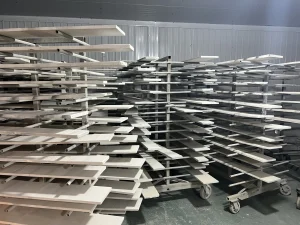
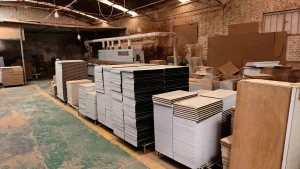
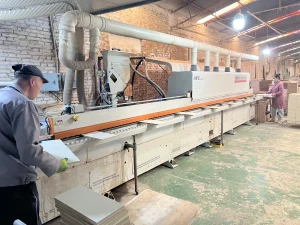
For furniture orders, buyers can ask for a simple production update plan. It may include material arrival photos, first-piece assembly photos, finish confirmation, hardware confirmation, packing trial photos, and final packing photos. This does not need to be complicated, but it should be agreed before payment.
Clear milestones help both sides. The buyer sees progress before the shipment deadline. The supplier has fewer last-minute questions. If something is wrong, it can be corrected before goods are fully packed.
Before Balance: Define Inspection and Packing Evidence
Balance payment is one of the most sensitive points in a furniture order. The supplier wants payment before release of goods. The buyer wants confidence that the goods match the order. The best way to reduce conflict is to define inspection and evidence requirements before production starts, not after goods are already packed.
Buyers should clarify whether they need internal inspection photos, buyer-side inspection, third-party inspection, video check, sample comparison, packing photos, carton marks, loading photos, or shipping documents before payment. The level of checking depends on order value, product complexity, supplier history, and buyer channel.
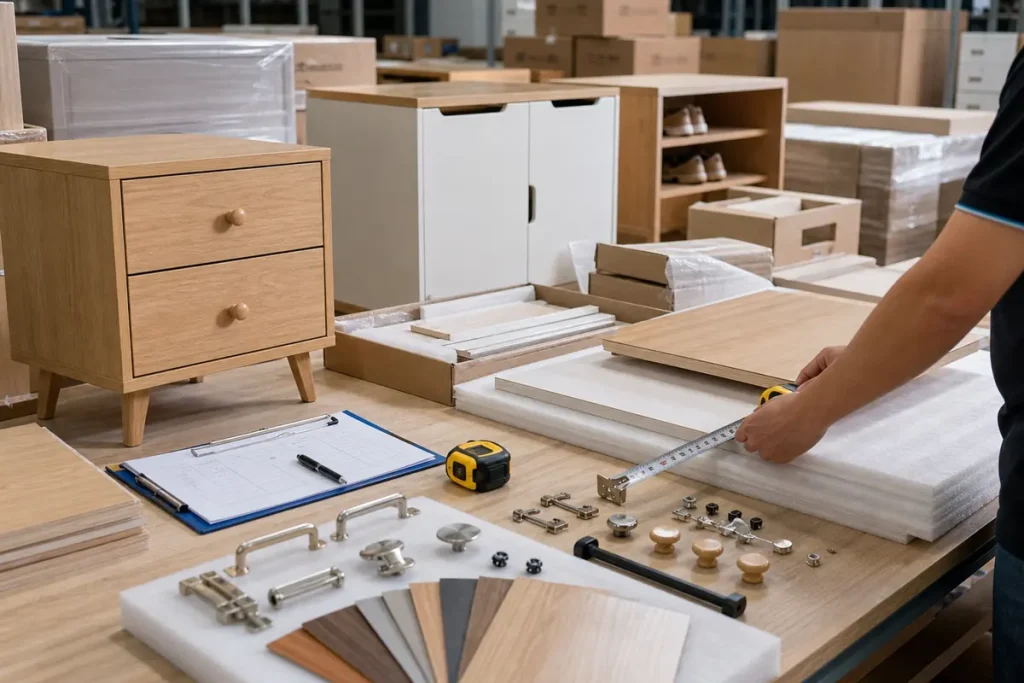
Packaging deserves special attention because furniture can pass visual inspection and still create claims after shipment. Carton strength, corner protection, accessory placement, instruction sheets, and loading pressure all affect the final result. The article on bedroom furniture packaging and loading gives a useful framework for these checks.
Clarify What Happens When Problems Are Found
Payment terms should not only say when money is paid. They should also explain what happens if the order is not ready, if inspection finds defects, if packaging does not match the agreement, if the supplier changes material, or if the shipment schedule moves.
For example, buyers can ask: Will the supplier repair before balance payment? Will replacement parts be provided? Who pays for rework? Will the supplier send updated photos after correction? If the order is delayed, how will the new shipping plan be confirmed? These questions are easier to discuss before payment than after a problem appears.
This does not mean every order needs a complex contract. It means the important commercial points should be written clearly enough that both sides know the next step when something goes wrong.
Payment Terms Should Match the Quote
A low price with unclear payment terms may not be a good deal. Buyers should compare payment terms together with product specification, production responsibility, packaging level, lead time, and after-sales support. One quote may look cheaper because it excludes stronger packaging, inspection support, spare parts, or special hardware. Another quote may include more responsibility.
The earlier article on comparing supplier quotes before sampling explains this broader comparison. Payment terms are one part of that same decision: what is the buyer actually receiving for the money paid?
A Practical Payment-Term Checklist
Before sending a deposit or balance payment, buyers can review this checklist:
- Product specification, drawings, materials, finish, hardware, packaging, and accessories are confirmed.
- Sample status is clear: approved, approved with changes, or still pending.
- Deposit amount, balance condition, payment deadline, and bank details are written clearly.
- Production start date, expected completion date, and update milestones are agreed.
- Inspection method, packing evidence, and correction process are confirmed before balance payment.
- Responsibility for defects, rework, replacement parts, and delays is discussed before production.
- Shipment documents, release condition, and forwarder coordination are understood by both sides.
- The payment stage matches the supplier’s real capability and the buyer’s risk tolerance.
Final Note
Furniture payment terms are not only about deposit percentage or balance timing. They are part of order control. A buyer should know what has been confirmed, what evidence will be provided, and what happens if the product, packing, or schedule does not match the agreement.
The safest payment structure is not the one that sounds strict on paper. It is the one connected to a clear product file, realistic sample approval, visible production milestones, inspection before release, and a supplier that can communicate problems before they become expensive.