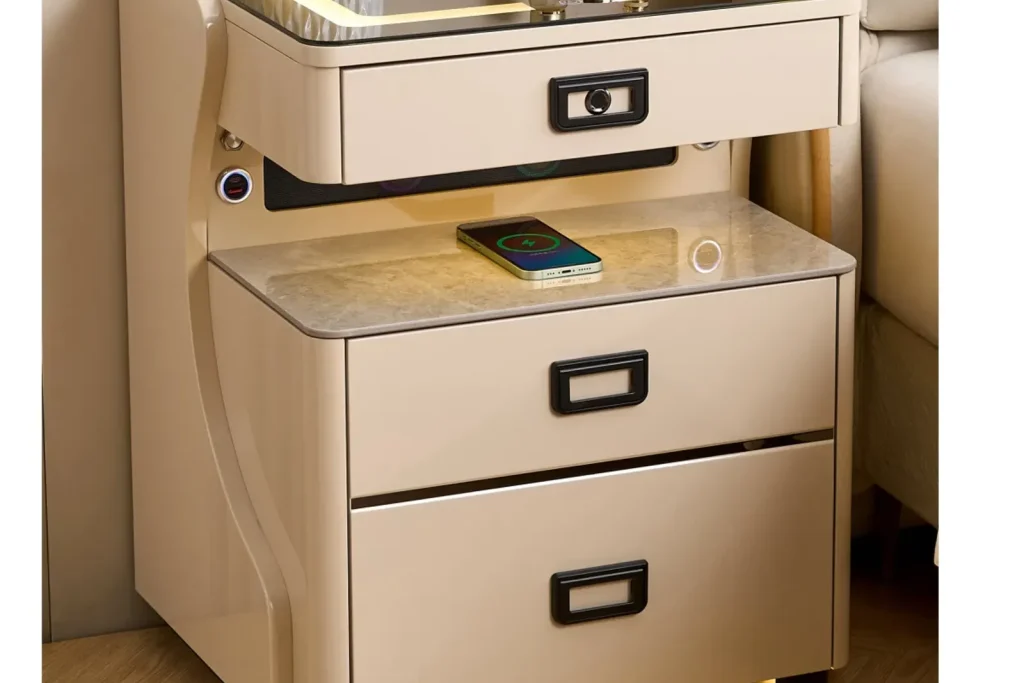
Private storage inside a smart nightstand is not only a lock added to a drawer. For buyers, the real product question is whether the drawer layout can handle the items people actually store near the bed: marriage certificates, passports, document envelopes, jewelry, watches, spare keys, cash envelopes, small electronics, medicine cards, chargers, and everyday bedside accessories.
This article focuses on design details rather than general use cases. A lockable nightstand may look persuasive in a product photo, but the buyer still has to check internal dimensions, drawer zoning, lock placement, lining, cable separation, stability, packaging, and after-sales parts before treating the item as a serious bedroom furniture product.
Kuan Zhang’s view is simple: if a supplier says the nightstand is suitable for documents and valuables, the sample should be tested with documents and valuables. A feature name is not enough. The drawer has to prove that it can store those items cleanly, privately, and without damaging the normal bedside experience.
Start With Internal Usable Space
Outside dimensions can be misleading. A 50 cm or 60 cm nightstand may still have a shallow drawer because space is taken by lighting, charging modules, drawer runners, lock parts, speakers, or decorative panels. Buyers should measure the usable internal width, depth, and height of each storage zone.
For document storage, the most important question is whether common envelopes, passports, certificates, warranty papers, and small document folders can lie flat. A drawer that forces papers to bend is not a good document drawer. If the product copy mentions marriage certificates or passports, the drawer should be tested with real items of that size.
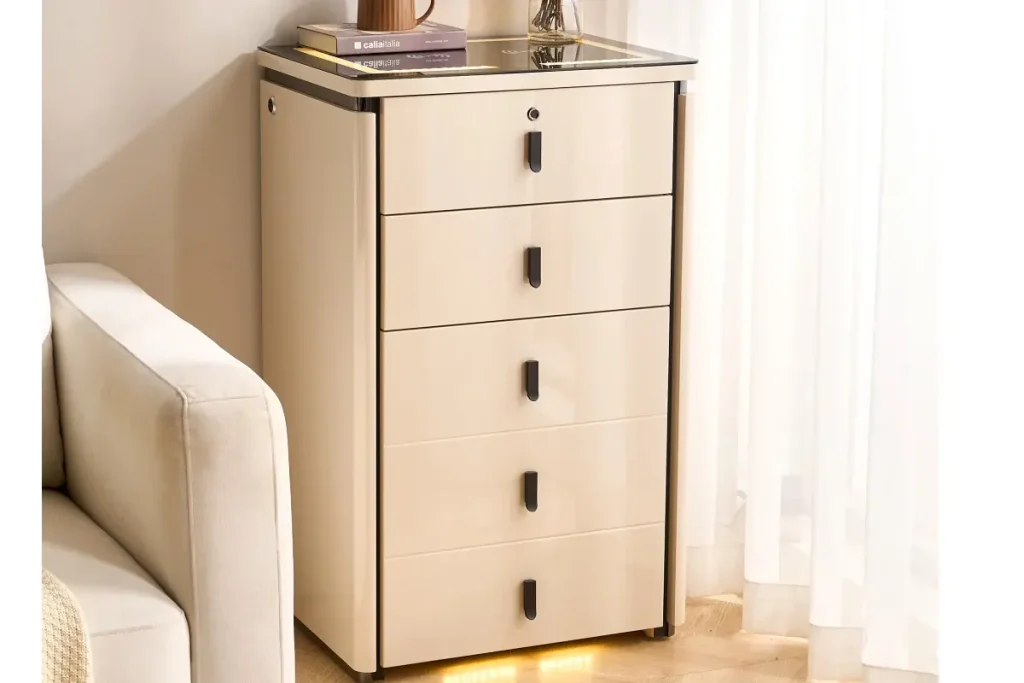
For jewelry and watches, height and surface finish matter. A drawer may have enough area but still scratch items if the base is hard, rough, or interrupted by screw heads. Soft lining, removable trays, or simple dividers can make the difference between a useful private drawer and an empty box with a lock.
Separate Documents, Valuables, and Daily Bedside Items
A private-storage nightstand should not make every user interaction depend on the lock. People still need quick access to a phone, glasses, tissues, books, remotes, chargers, and small personal items. If the lockable zone consumes the whole cabinet, the product may become less convenient than a normal nightstand.
A more practical layout uses separate zones: one open or easy-access area for daily items, one standard drawer for normal clutter, and one private drawer or compartment for documents and valuables. This layout keeps private items controlled without making the entire nightstand feel like a safe box.
The broader category article on multifunction nightstands with safe storage explains the general market and use case. This article narrows the question to drawer design and product-development checks.
Design the Lock Around Real Bedroom Behavior
Lock position should match how the product is used beside a bed. A keypad placed too low is awkward. A side fingerprint reader may be blocked when the nightstand sits close to a wall. A bright digital panel can look modern in a showroom but feel intrusive in a dark bedroom.
Mechanical locks, digital keypads, and fingerprint locks each create different buyer checks. Mechanical locks need spare-key planning. Digital locks need battery access, reset logic, emergency opening, and clear instructions. Fingerprint locks need enrollment steps, failure handling, backup access, and replacement-module planning.
None of this should be left to the factory’s verbal promise. It belongs in the specification sheet, the sample review, the user manual, and the spare-parts plan. The guide on furniture product specification before quotation is relevant because lock type, drawer structure, internal dimensions, packaging, and testing standards should be defined before price comparison.
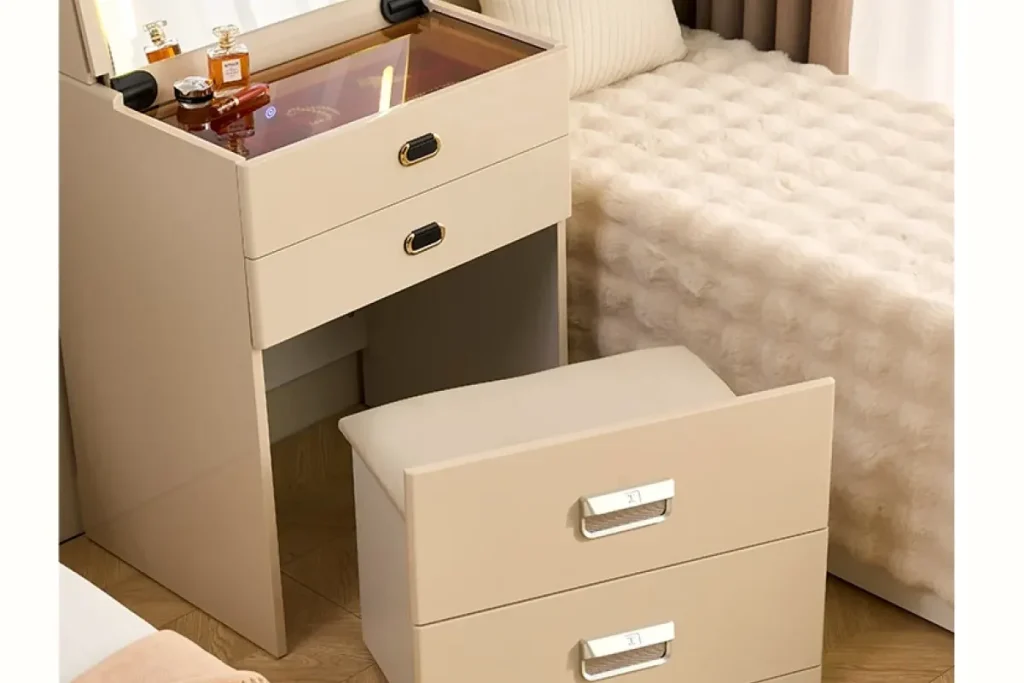
Keep Charging and Document Storage Apart
Smart nightstands often include wireless charging, USB or Type-C ports, LED lights, speakers, or sensor modules. These features should not compete with document storage. Paper, jewelry, cables, adapters, and heat sources should be planned as separate zones whenever possible.
If the charging surface sits directly above the private drawer, buyers should check heat space, cable routing, spill risk, and whether the drawer can open while devices are charging. If the power adapter sits inside the same cabinet area as paper storage, the design needs extra attention. A convenient charging feature should not create a messy or risky storage area.
The technical article on smart nightstands and connected bedroom furniture goes deeper into modules, cable routing, service parts, and supplier checks. Those details become more important when private storage and electronics share a small cabinet.
Use Material and Lining Details to Support the Promise
Document drawers need a clean, dry, predictable surface. Jewelry drawers need protection against scratching. Watch storage may need a tray or divided area. Key storage may need a small removable box or divider so keys do not scrape other items.
These are small design choices, but they change product quality. A buyer can ask for felt lining, PU lining, removable plastic trays, velvet-style inserts, paper-friendly drawer bottoms, or simple adjustable dividers depending on target price and channel. The point is not to make the nightstand complicated. The point is to make the private-storage feature believable.
Suppliers should also confirm whether the lining can be cleaned, whether adhesive smell is controlled, whether inserts stay in place during shipping, and whether the drawer still closes smoothly after the insert is added.
Check Structure and Stability Around the Lock Area
A lock concentrates stress on a small part of the cabinet. If the drawer front, side panel, hinge area, or lock mounting plate is weak, the lock can make the product feel worse instead of better. Buyers should check panel thickness, screw holding, edge banding, hinge alignment, runner quality, drawer front gap, and whether repeated opening affects the lock position.
For taller designs, stability also matters. A private-storage nightstand may hold heavier items than a normal bedside table. Watches, jewelry boxes, small electronics, documents, and chargers add weight. If the cabinet is narrow and tall, buyers should check tipping risk and drawer-extension behavior.
Packaging Must Protect the Functional Parts
Private-storage nightstands have several damage-sensitive areas: lock face, keypad, fingerprint reader, drawer front, hinges, glossy top, lighting strip, charging surface, adapters, keys, inserts, and instructions. If any of those parts is missing or damaged, the customer may treat the whole product as defective.
Packaging should hold accessories in a fixed position, protect the lock face from pressure, and prevent drawer movement during transport. For export buyers, carton strength, corner protection, foam placement, accessory bags, and loading direction should be checked before mass shipment.
The article on bedroom furniture packaging and loading is useful here because functional bedroom furniture needs packaging that protects both cabinet appearance and built-in features.
Buyer Checklist for Sample Review
- Measure internal drawer width, depth, and height after runners, lock parts, and inserts are installed.
- Test the private drawer with real passports, document envelopes, certificates, jewelry boxes, watches, keys, and small electronics.
- Confirm whether the lock position is usable beside a bed and not blocked by the wall, mattress, or neighboring furniture.
- Check backup access, spare keys, battery replacement, reset steps, and replacement lock modules.
- Separate charging, lighting, cables, adapters, and heat sources from paper storage wherever possible.
- Inspect drawer runners, hinge alignment, lock mounting strength, panel thickness, and cabinet stability.
- Confirm lining, trays, dividers, odor control, cleaning method, and whether inserts stay fixed during shipping.
- Review packaging for lock face protection, accessory packing, carton strength, and instruction clarity.
Final Note
The value of a private-storage nightstand is not created by the word “safe” alone. It is created by the details: usable drawer space, clear zones, reliable lock placement, suitable lining, separated charging, stable structure, protected packaging, and serviceable parts.
For buyers, this is a product-development issue. If the nightstand is intended to store marriage certificates, passports, jewelry, watches, keys, and other private bedroom items, the sample should be reviewed with those exact items before the order moves forward.