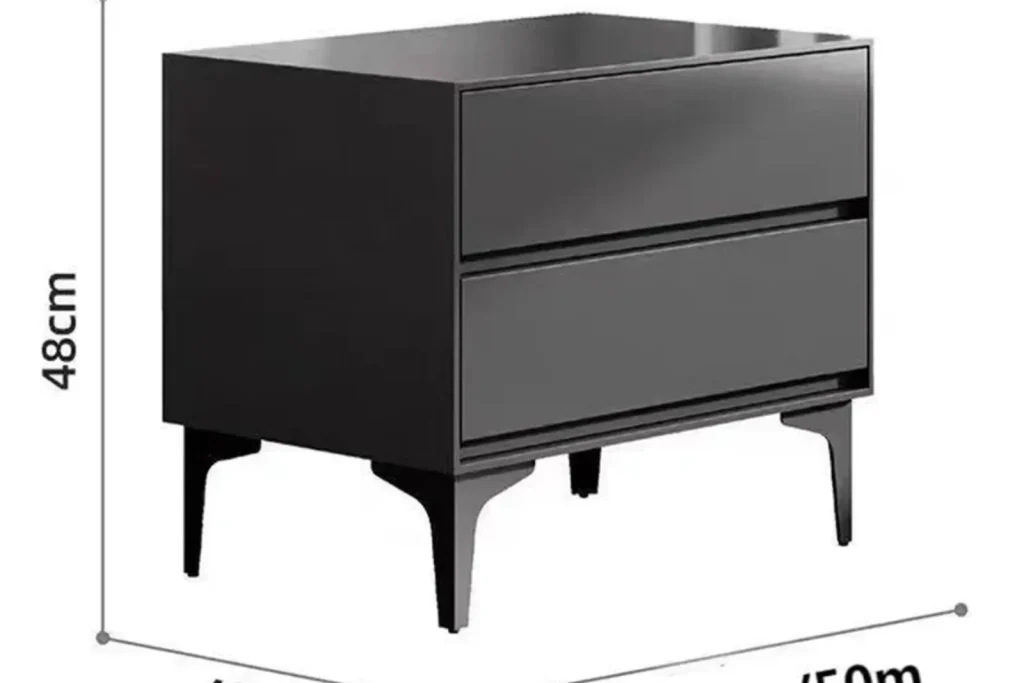
A smart nightstand can look finished in a product photo and still fail during the first thirty minutes after delivery. The customer may not know which adapter belongs to the product, where the cable should connect, how to reset a touch control, whether the light should work before assembly, or which screws belong to each step.
That first-use experience matters. For a normal bedside cabinet, poor instructions may lead to slow assembly. For a smart nightstand, poor instructions can also create false quality complaints: the function is not broken, but the customer cannot set it up correctly.
Kuan Zhang’s view is that buyers should treat unboxing and setup as part of product development. A sample is not ready only because the cabinet looks good and the module turns on. It is ready when a dealer, customer-service team, or end user can open the carton, identify every part, assemble the product, and use the smart functions without guessing.
Why Setup Is More Important for Smart Nightstands
Smart nightstands combine furniture assembly with functional setup. The buyer is no longer checking only panels, drawers, handles, and finish. The product may include a charging module, USB or Type-C ports, a power adapter, LED lights, touch controls, a speaker, a lock, a mirror, a sensor, or a hidden cable route.
Each added function creates one more point where the user can become confused. If the cable is hidden under a drawer, if the adapter is packed in a small corner, if the touch icon is not explained, or if the light has a long-press function, the instruction flow must make that clear.
This is different from the article on after-sales planning for smart nightstands. After-sales planning asks what happens when something fails. Setup planning asks how to prevent avoidable complaints before they begin.
The Manual Should Match the Real Product Version
A manual is weak when it is too generic. Buyers often see one instruction sheet used across several similar bedside cabinets. That may work for simple furniture, but it is risky for smart nightstands because module position, adapter type, control method, cable route, and accessory bag can change between versions.
The manual should show the exact product structure. If the charging area is on the top, show it. If the power cable exits from the back, show it. If the LED control has several modes, explain them with short steps. If a lock has a reset method or backup key, the instruction should not hide that information in small print.
Buyers should also check whether the manual uses clear drawings, correct part names, and realistic step order. A beautiful product can still feel low quality if the customer has to search online or contact the seller before using the basic functions.

Accessory Bags Need a Simple Logic
Accessory bags are small, but they carry a large part of the customer experience. Screws, handles, feet, brackets, adapters, charging cables, keys, remote controls, felt pads, and instruction sheets should not be mixed in a way that forces the customer to sort everything on the floor.
A better approach is to label bags by step or function. Furniture hardware can be separated from electrical accessories. Spare screws should be identified clearly. If the product has a lock, the backup key should be packed securely and mentioned in the manual. If the adapter is needed before testing the light or charging module, it should be easy to find.
For importers and dealers, this is not only a customer-service issue. Missing or confusing accessories can create replacement shipments, negative reviews, unnecessary returns, and warehouse rework. The cost is often higher than the cost of improving the accessory packing method.
Assembly Steps Should Respect the Smart Components
Some smart nightstands are fully assembled. Others are shipped with legs, handles, drawers, mirror parts, shelves, or decorative panels separated to reduce carton size or protect fragile areas. When assembly is required, the sequence must protect wires, modules, glass, and finished surfaces.
Buyers should ask whether the customer might accidentally pull a cable, pinch a wire behind a drawer, overtighten screws near a module, scratch a glossy top, or block a ventilation gap. These are not rare problems when furniture and electronics meet in one compact product.
The article on power modules and cable management explains why cable paths matter. The same logic should appear in the setup process. If a cable route is important, the manual and packaging should make it visible.
First-Use Guidance Can Reduce False Defects
A customer may think a product is defective when it simply has not been powered correctly, reset correctly, or used in the intended sequence. This is common with touch controls, wireless charging, Bluetooth speakers, LED lighting, and lock functions.
First-use guidance should answer direct questions. Where is the main power connection? Does the adapter need to be connected before testing the light? How does the user turn the light on and off? Does wireless charging require phone alignment? Does Bluetooth need pairing? Does the lock need a first reset? What should the user check before contacting service?
The goal is not to overload the manual. The goal is to put the right answer where the customer needs it. A short quick-start card can be useful when the product has several smart functions.
Dealer Display Needs the Same Setup Discipline
Setup quality also affects dealers. A showroom team may unpack one sample and demonstrate it many times. If the team does not know how to connect the adapter, reset the light, explain the charging area, or identify the accessory bag, the product will be presented poorly.
For buyers selling through retail partners, a dealer setup sheet can be more useful than a long manual. It can show the display steps, the main selling points, the power connection, the functions to demonstrate, and the warnings that should not be missed. This helps the dealer avoid wrong claims and makes the product easier to sell with confidence.
This connects with touch-control interface checks and LED lighting in smart nightstands. A function that is difficult to explain at display level may also be difficult for customers at home.

Packaging Should Support Opening and Repacking
Packaging is often designed only to survive shipment. For smart nightstands, buyers should also think about opening, inspection, and repacking. The customer or dealer should be able to find the manual, accessories, and power parts without damaging foam, scratching the surface, or losing small components.
If a return happens, repacking becomes important. A product may come back because the customer ordered the wrong size, could not set up the function, or misunderstood the feature. If the carton and inner protection are destroyed during opening, the dealer has fewer options for inspection, repair, resale, or replacement.
The broader article on bedroom furniture packaging and loading checks is useful background. Smart nightstands add one more layer: the packaging must protect both the furniture body and the customer’s ability to understand the product.
What Buyers Should Check Before Approval
A practical sample review should include a setup trial. Ask someone who did not design the product to open the carton, identify the parts, read the manual, assemble the product if needed, power it on, test each function, and repack it. Watch where they hesitate.
That hesitation is useful information. If the person cannot find the adapter, the packing layout needs work. If they confuse screw sizes, the hardware bag needs labeling. If they test the light before connecting the correct cable, the quick-start card needs a better first step. If they cannot understand the control panel, the product may need clearer icons or a simpler function flow.
Kuan Zhang usually treats this as a buyer-side risk check, not a blame exercise. The goal is to find problems while they are still cheap to fix. Once the goods are in a dealer warehouse or customer home, the same issue becomes slower and more expensive.
Buyer Checklist
- Confirm that the manual matches the exact product version, module position, adapter, and control method.
- Separate furniture hardware from electrical accessories and label bags clearly.
- Check whether the customer can find the manual, adapter, cables, keys, and small parts immediately after opening the carton.
- Run a real setup trial with someone who has not seen the product before.
- Make sure assembly steps do not pinch wires, scratch surfaces, block ventilation, or damage modules.
- Add quick-start guidance for power connection, lighting, charging, Bluetooth, lock reset, or touch-control use when needed.
- Prepare a short dealer display note if the product will be sold through showrooms or retail partners.
- Review whether the carton and inner protection allow inspection and repacking after opening.
Final Note
Smart nightstand buyers often focus on the visible function, but the first-use process decides whether that function feels reliable. Clear instructions, logical accessory packing, careful assembly steps, and easy setup can reduce avoidable complaints before they reach customer service.
For importers, dealers, and brand teams, this is a practical opportunity. A smart nightstand that is easy to open, assemble, explain, and repack is easier to scale than a product that only looks good in the first product photo.