A furniture sample can be approved and still fail to control production. The first sample may have been made by a development team using parts that are not yet fixed, a finish selected from a small batch, or a drawer arrangement adjusted by hand. When the production order begins, purchasing, panel processing, assembly, finishing, packing, and inspection may each work from slightly different information. The result is a product that is close to the approved sample, but not reliably the same product.
A golden sample is the reference used to prevent that drift. It is not simply the nicest sample in the showroom. It is the agreed version that connects the physical product to the product code, drawings, finish reference, component choices, and approved changes. Used well, it gives the buyer and factory one practical answer to a basic question: what exactly should production match?
Kuan Zhang’s view is that a golden sample only has value when it can settle a disagreement. If it is not identified clearly, cannot be compared with the current order, or does not reflect approved changes, it becomes a display piece rather than a production control tool.
Do Not Treat Every Sample as the Same Sample
Furniture projects often use several samples for different decisions. An early development sample may test a shape, a storage idea, or a smart function. A presentation sample may be prepared for a buyer meeting or product photo shoot. A pre-production sample may be the first complete version made with the intended materials and components. These samples can all be useful, but they should not be treated as automatically interchangeable.
Before an order is released, the buyer should decide which version becomes the production reference. That version should represent the approved dimensions, construction approach, finish, hardware, visible details, and functions. For a smart bedside table, it should also identify the module, control position, wiring arrangement, cable outlet, and any visible indicator that the customer will see.
The earlier article on furniture MOQ and sample orders is helpful before this point because it covers the commercial questions around a sample. A golden sample begins after the buyer has decided the product is ready to represent the order, not merely when a supplier has sent something attractive enough to discuss.
Build the Reference Around One Product Version
The physical cabinet is important, but it is rarely enough on its own. A useful golden-sample record ties the cabinet to a short set of documents and images. The goal is not to create unnecessary paperwork. The goal is to make the important choices visible when the people on the factory floor, the buyer, and any inspection team are not looking at the same object at the same time.
At a minimum, the record should state the product code, revision date, approved dimensions, finish or colour reference, visible hardware, key material or construction choices, and required functions. It should include clear photographs of the front, side, back, top, drawer or door interiors, and any features that could be confused with another version. If there are approved tolerances or cosmetic limits, they should be stated in plain language rather than left to interpretation.
For bedroom furniture, small visible details matter. A drawer pull may have the same general shape but a different finish. A bedside top may use a different glass panel. The gap between a drawer front and cabinet side can change the whole appearance of a pair of nightstands. The product specification sheet gives a practical starting point for gathering those choices before quotation; the golden-sample record turns the final approved choices into a reference for production.
Keep the Physical Sample and the Written Record Together
Where practical, the factory should keep the approved physical sample protected and identified with the product code and revision. The buyer may also keep a matching record or a second approved sample when the project is high value, the supply chain is complex, or the distance makes physical comparison difficult. The important point is that everyone knows which version is current.
Photographs are not a substitute for a physical finish reference, especially when a product uses woodgrain, paint, metal trim, glass, or a glossy surface. Screens, lighting, and image editing can change how a colour appears. The reference file should say which physical chip, panel, handle, or component is the approved comparison point.
It is also useful to record the condition of the golden sample when it is approved. A small mark, repair, or temporary fitting on a development sample should not become an accidental allowance for every production unit. If something on the sample is accepted only for development, note that clearly and close it before production begins.
Use the Reference Before Materials and Components Are Committed
The first production check should happen before the order has moved too far through the factory. Once the selected board, trim, hardware, electrical parts, and packaging artwork have been purchased in volume, correcting a wrong version becomes slower and more expensive. A short pre-production review can confirm that the parts being prepared match the approved reference and that any open questions have an owner.
This is especially important when a product has both decorative and functional details. A new top panel may fit the cabinet but leave less room for a charging area. A substitute handle may have the same mounting centres but look different against the approved finish. A new drawer slide may change the usable drawer space. These changes should be reviewed against the golden sample and product record before they become a production decision.

The article on nightstand drawer slides and hardware explains why component names alone are not enough. A buyer needs to see how the selected part performs and how it affects the complete cabinet.
Check the First Complete Piece, Not Just the First Panel
Individual parts can be correct while the assembled cabinet is not. The first complete production piece is where the buyer and factory can check the relationship between the panel sizes, finish, hardware, drilling, drawer movement, and visible gaps. It is also the point at which a smart component should be tested in the finished cabinet, with the intended cable paths and control locations in place.
Compare the first complete piece against the approved reference in a structured order. Start with the product code and dimensions. Then look at the overall proportion and finish. Check doors or drawers, handles, legs, corners, exposed edges, and any decorative lines. Finally, verify the functions that matter to the product: storage access, power or charging features where present, lights, locks, mirrors, or controls.
Do not use the first-piece review to create a new design direction informally. If a change is needed, record it as a revision, update the reference material, and decide whether the golden sample itself needs to be replaced or annotated. Otherwise, the buyer can end up with one version in the sample room, another version in the production notes, and a third version in the outgoing order.
Place Checks at the Work Stages Where Errors Become Visible
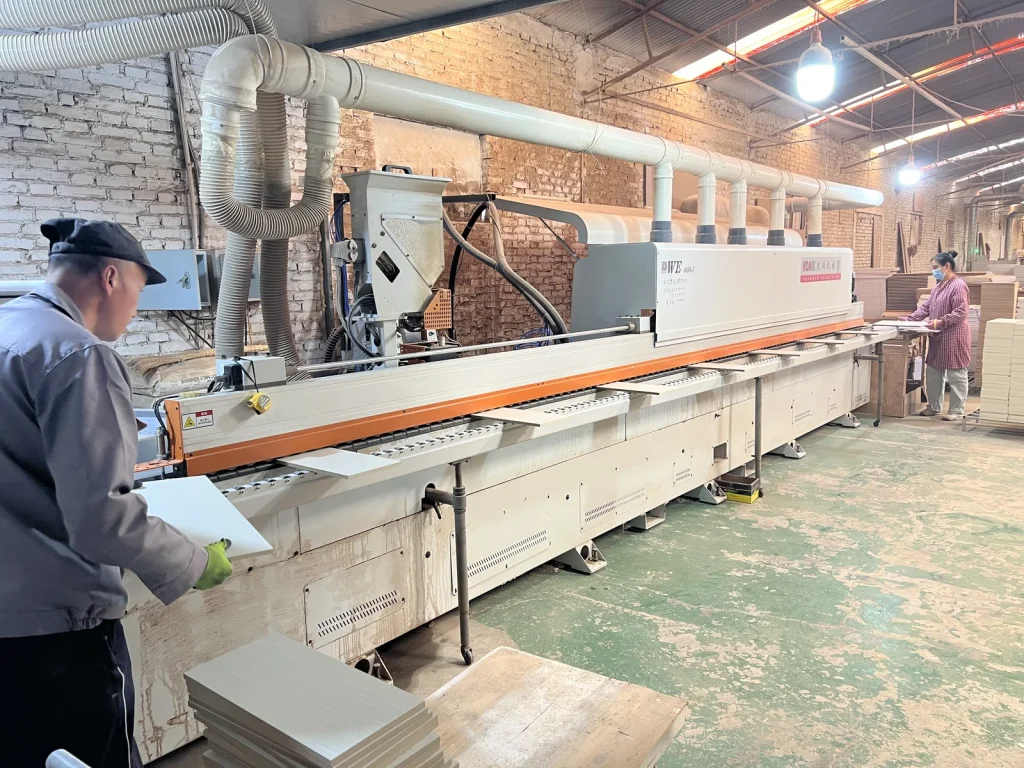
Final inspection is important, but it is too late to discover every issue for the first time. A better approach is to place a few focused checks where the relevant detail becomes visible. For panel furniture, that may mean a check after cutting and drilling, another after edge treatment or finishing, another during assembly, and a final comparison before packing. The exact sequence depends on the product and factory process.
At each stage, the checker does not need to repeat the whole golden-sample review. They should compare the points that can still be corrected at that stage. For example, panel dimensions and holes are easier to correct before assembly; a handle, glass top, light strip, or drawer alignment is easier to assess after the cabinet is assembled. The record should say who signs off, what they checked, and how a deviation is escalated.

A buyer should also distinguish between a one-off defect and a version error. A scratched top is a quality issue on an individual unit. A top made from the wrong finish is a version-control issue that may affect the whole batch. The second problem needs a broader response than simply repairing one piece.
Control Changes Instead of Letting Them Accumulate
Changes happen in real projects. A component may be unavailable, an agreed finish may need an adjustment, or a technical detail may improve after the first run. The risk is not the change itself. The risk is allowing it to pass through as a verbal agreement without updating the version that production and inspection will use.
For every approved change, record what changed, why, which product codes are affected, the effective date or order, and whether a new sample or comparison photo is needed. Then update the reference set. An old reference should be marked as superseded rather than left on the factory floor where it can be used by mistake.
Product photography needs the same discipline. If the visible hardware, finish, drawer layout, or smart feature changes, make sure that the retail images do not continue to show the previous version. The nightstand product photography approval guide explains how to keep photographed samples linked to the product actually being supplied.
Use the Golden Sample Again for Repeat Orders
A repeat order should not begin with the assumption that the old sample is still current. Before the order is confirmed, check the existing golden sample against the current component availability, product documents, packaging, and customer-facing images. If it still matches, the reference can support a faster start. If it does not, the buyer should resolve the difference before materials are prepared.
This check is valuable when a product has been out of production for a period or when the supplier has changed a component source. It also gives the buyer a useful opportunity to review customer feedback, return reasons, and any recurring assembly or use issue before the same product is repeated without adjustment.
Golden Sample Checklist for Buyers
- The approved production version is identified by product code and revision date.
- The physical reference and written record show the same dimensions, finish, hardware, construction details, and functions.
- Photographs cover the visible surfaces, storage interiors, back view, and important functional features.
- Approved finish, hardware, and component references are clear enough to compare physically where needed.
- The first complete production piece is checked against the reference before the run continues.
- In-process checks focus on the work stage where each requirement becomes visible.
- Every approved change is dated, traceable, and reflected in the current reference set.
- Repeat orders begin with a review of the current reference, not an assumption that an old sample still applies.
Final Note
A golden sample is a practical bridge between product development and repeatable production. It helps a buyer protect the choices already made, gives the factory a clear target, and makes inspection more specific than a general request for good quality.
Before a bedroom furniture order moves into volume production, ask one direct question: can the buyer, production team, and inspection team point to the same approved version? When the answer is yes, the sample has become a useful control point rather than a memory of an earlier stage.